Archery Tie-Break Rules Explained
Archery Tie-Break Rules Explained
Ties are a small, dramatic part of target archery—but they are also precisely regulated. For archery bettors and analysts the tie-break (or “shoot‑off”) is a defined procedure with predictable mechanics: different match formats use different scoring systems, different shoot‑off procedures apply for individuals, teams and mixed teams, and sportsbooks may treat extra arrows or incomplete matches in specific ways when settling bets. This guide explains tie-break rules from first principles, gives clear competition examples, shows how bookmakers typically settle these moments, and offers a practical research checklist for archery bettors.
Quick overview: why ties occur and what a shoot-off is
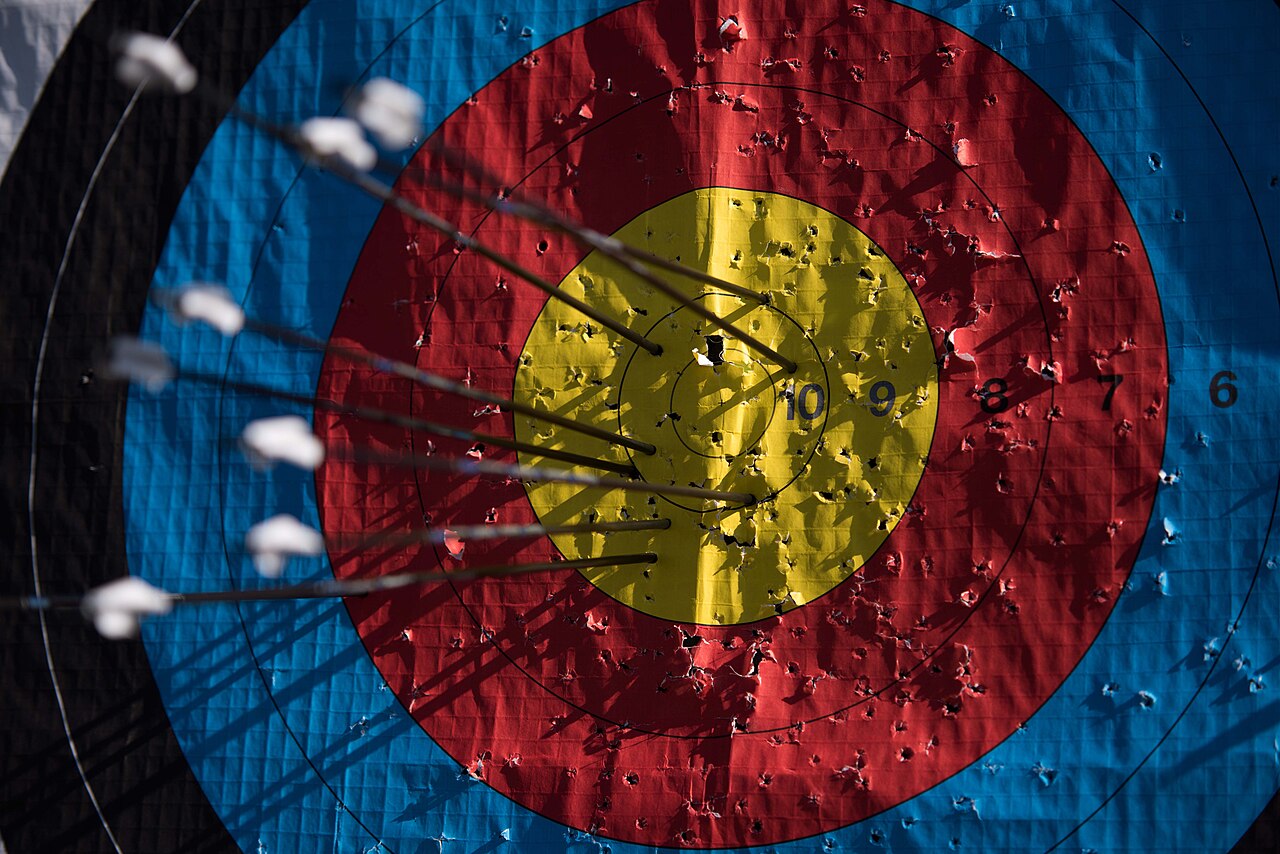
Archery ties arise because match formats compare small sets of arrows (individual sets, ends, or total cumulative points) and top athletes frequently produce equal totals. A shoot-off is a short, standardised tie-break procedure used to produce a single winner when a match must be decided on the day. World Archery defines a shoot-off as the procedure in which each archer—or each archer on a team—shoots a single arrow (or a small set of arrows) and the arrow(s) closest to the centre determine the winner. The exact format depends on whether the match uses the set system (common in recurve individual matches) or cumulative scoring (common in compound matches). ([documents.worldarchery.org](https://documents.worldarchery.org/Media/InformationSheets/011TheArcheryGlossary.pdf))
Core match formats and when shoot-offs apply
Recurve individual (set system)
Recurve individual elimination matches are decided with the set system: each set is three arrows per archer; a set win awards 2 set points, a tie gives 1 point to each archer, and the first archer to reach six set points (or the winner after five sets) takes the match. If the match ends tied (commonly 5–5 after five sets), the match proceeds to a one‑arrow shoot-off: each archer shoots one arrow, and the arrow closest to the centre wins. If both shoot the same score (for example both 10s) the judge measures distance to the centre. Time limits apply to shoot-off arrows. ([documents.worldarchery.org](https://documents.worldarchery.org/Media/InformationSheets/011TheArcheryGlossary.pdf))
Compound individual (cumulative scoring)
Compound elimination matches normally use cumulative scoring over a fixed number of arrows (for example 15 arrows, shot as five ends of three). If the total score is tied after the regulation arrows, a one‑arrow shoot-off is used: the archer whose shoot‑off arrow is closest to the centre wins. Compound matches do not use the set‑point method used in recurve, but the single‑arrow closest‑to‑centre principle remains the standard shoot‑off decider. ([extranet.worldarchery.sport](https://extranet.worldarchery.sport/documents/index.php/Rules/RuleBookversions/2026-01-27/EN-Book6–2026-01-27Version.pdf))
Team and mixed‑team matches
Team matches (three archers of the same gender and bow type) and mixed‑team matches (one male + one female) use team versions of the set or cumulative formats depending on discipline and event. If two teams are tied at the end of a match, elimination/finals shoot‑offs are arranged as follows:
- Team (3 archers): one end of three arrows (one arrow per archer) for score. If scores are tied, the team with the arrow closest to the centre wins; if still tied, the second (and then third) closest arrow is measured. Time limits are specified for team shoot‑offs. ([documents.worldarchery.org](https://documents.worldarchery.org/Judging/Manuals/JudgeGuidebook_ENG.pdf))
- Mixed team (2 archers): one end of two arrows (one arrow per archer). If tied, the same closest‑to‑centre tiebreak applies. ([documents.worldarchery.org](https://documents.worldarchery.org/Judging/Manuals/JudgeGuidebook_ENG.pdf))
Shoot-off mechanics and measurement (what judges do)
- Location and target face: shoot‑offs use the target(s) the match was being contested on. For compound shoot‑offs the target set‑up may be changed to a single face in the centre of the butt. ([documents.worldarchery.org](https://documents.worldarchery.org/Judging/Manuals/JudgeGuidebook_ENG.pdf))
- Time limits: judges specify short time windows for shoot‑off arrows (examples: 40 seconds for mixed teams and 60 seconds for teams in elimination rounds; individual shoot‑off timing is also tightly controlled). ([documents.worldarchery.org](https://documents.worldarchery.org/Judging/Manuals/JudgeGuidebook_ENG.pdf))
- Scoring vs. nearest-to-centre: shoot‑offs are first judged by score (10 vs 9 etc.). If the shoot‑off scores are identical, the judge measures which arrow is physically closest to the centre (using appropriate measuring equipment). If necessary, second and third closest arrows decide team shoot‑offs. ([documents.worldarchery.org](https://documents.worldarchery.org/Judging/Manuals/JudgeGuidebook_ENG.pdf))
- If the shoot‑off remains unresolved after the measuring procedure, successive single‑arrow closest‑to‑centre shoot‑offs may be used until a winner emerges (this is rare but provided for in the rules). ([extranet.worldarchery.sport](https://extranet.worldarchery.sport/documents/index.php/Rules/RuleBookversions/2026-01-27/EN-Book6–2026-01-27Version.pdf))
Summary table: shoot‑off formats at a glance
| Match type | Normal scoring | Shoot‑off | Decider if equal score |
|---|---|---|---|
| Individual (Recurve) | Set system (3 arrows per set) | 1 arrow each (single‑arrow shoot‑off) | Arrow closest to centre (judge measures) |
| Individual (Compound) | Cumulative (e.g., 15 arrows total) | 1 arrow each | Arrow closest to centre |
| Team (3 archers) | Set or cumulative (event rules) | 1 arrow per archer (3 arrows total) | Highest shoot‑off total; if tied → closest arrow, then 2nd, etc. |
| Mixed team (2 archers) | Set or cumulative | 1 arrow per archer (2 arrows total) | Highest shoot‑off total; if tied → closest arrow |
Note: the exact number of arrows per set and time allowances are defined in the World Archery rulebook and judges’ guidance for each competition and discipline; organisers publish the specific round format in event bylaws. ([extranet.worldarchery.sport](https://extranet.worldarchery.sport/documents/index.php/Rules/RuleBookversions/2026-01-27/EN-Book6–2026-01-27Version.pdf))
What tie-break rules mean for archery bettors
From a betting perspective, tie-breaks introduce several practical points you must treat as facts rather than assumptions:
- Bookmakers can (and do) count shoot‑off arrows when settling markets. For example, bet365’s archery rules state explicitly that “For betting purposes Extra Arrows will count.” That means a shoot‑off arrow can change the outcome of a match market even after regulation arrows are complete, and bettors should not assume markets are settled before a shoot‑off has finished. ([help.bet365.com](https://help.bet365.com/s/en/sportsrules/archery))
- Markets can be voided if a match starts but is not completed (operators list specific markets that will be void unless the outcome is already determined). Always read the operator’s sports rules for archery before wagering. ([help.bet365.com](https://help.bet365.com/s/en/sportsrules/archery))
- Archery market coverage is event‑dependent: sportsbooks tend to offer the most complete archery markets around major events (Olympics, World Archery Championships, Hyundai Archery World Cup stages). Liquidity and in‑play market depth on routine domestic or small international events are often thin; an exchange (Betfair) can give better value when liquidity exists, but it will also be thinner than mainstream sports. Use established operators for major events and expect limited markets elsewhere. ([livepanthers.com](https://livepanthers.com/live-betting/archery/))
How to research ties, shoot‑offs and markets — a practical checklist
Before you place a match or in‑play bet that could be affected by a shoot‑off, run this process:
- Confirm the competition format. Is the match recurve (set system) or compound (cumulative)? Event bylaws or the organiser’s technical guide will state the format. If in doubt, use the World Archery event pages or the event technical handbook. ([extranet.worldarchery.sport](https://extranet.worldarchery.sport/documents/index.php/Rules/RuleBookversions/2026-01-27/EN-Book6–2026-01-27Version.pdf))
- Check the bookmaker’s sports rules for archery. Look for settlement language on shoot‑offs, extra arrows, and incomplete matches (these directly affect whether your stake stands). Bet365’s archery rules are a clear example of a sportsbook that publishes detailed archery settlement rules. ([help.bet365.com](https://help.bet365.com/s/en/sportsrules/archery))
- Review the archers’ ranking‑round scores, X‑count (number of inner‑10s/Xs) and recent head‑to‑head records. X‑count is used for ranking decisions in qualification ties and can be a proxy for an archer’s consistency under pressure. ([documents.worldarchery.org](https://documents.worldarchery.org/Judging/Manuals/JudgeGuidebook_ENG.pdf))
- Study prior shoot‑off appearance history where available. Some archers perform notably better or worse in single‑arrow pressure situations; the sample is small but still informative. Use match reports and World Archery news archives for examples. ([documents.worldarchery.org](https://documents.worldarchery.org/Judging/Manuals/JudgeGuidebook_ENG.pdf))
- Assess match conditions: wind, light and late match schedule. Environmental stress is often the decisive factor in a shoot‑off (the shoot‑off arrow is shot immediately following the final end, so changing conditions matter). ([extranet.worldarchery.sport](https://extranet.worldarchery.sport/documents/index.php/Rules/RuleBookversions/2026-01-27/EN-Book6–2026-01-27Version.pdf))
- For in‑play betting, track how quickly your bookmaker re‑opens markets between ends and whether they display an accurate end‑by‑end scoreboard or in‑play tracker—this is important for timing entry and cash‑out decisions. Independent reviews of archery in‑play operators note that only a handful of bookmakers keep archery markets open and usable during major events. ([livepanthers.com](https://livepanthers.com/live-betting/archery/))
Common analytical mistakes and how to avoid them
- Over‑weighting small sample size: shoot‑off records are short and noisy. Don’t overestimate a single past shoot‑off result. Use it as context, not destiny.
- Ignoring event format: confusing set vs cumulative rules leads to wrong expectations for