What Is a Shoot-Off in Archery Betting?
What Is a Shoot-Off in Archery Betting?
A shoot-off is a tie-breaking procedure used in head‑to‑head archery matches when the regular match format finishes level. For bettors the shoot‑off is the immediate, high‑pressure decider that determines the official winner and — depending on the bookmaker and market — how wagers are settled. This guide explains how shoot‑offs work under World Archery rules, how sportsbooks usually treat them, how to research events and markets, common mistakes bettors make, and practical tips for placing responsible, event‑aware archery bets.
How shoot-offs work in archery competition (the rules)
World Archery defines shoot‑offs by match format. The two rules that matter most for bettors are: (1) how many arrows are shot in the tiebreak, and (2) how the winner is decided if scores remain tied. These differ between individual recurve and compound events and between team and mixed‑team matches.
Individual matches (recurve and compound)
- Recurve (Olympic-style set system): individual recurve matches are played best‑of‑five sets (three arrows per set). If the match is tied 5–5 after five sets, a single‑arrow shoot‑off is used: each archer shoots one arrow; the archer with the higher scoring arrow wins; if scores are identical, the arrow closest to the centre wins and, if necessary, successive single‑arrow shoot‑offs follow until the tie is broken. ([worldarchery.sport](https://www.worldarchery.sport/sport/disciplines/target-archery?utm_source=openai))
- Compound (cumulative scoring): tied cumulative matches are also settled with a one‑arrow shoot‑off in outdoor target events; the same rules for measuring closest‑to‑centre apply. World Archery documentation and technical handbooks specify single‑arrow tiebreaks for outdoor target elimination matches. ([extranet.worldarchery.sport](https://extranet.worldarchery.sport/documents/index.php/Rules/RuleBookversions/2026-01-27/EN-Book4–2026-01-27Version.pdf?utm_source=openai))
Team and mixed team
- Team matches (three archers): when set points finish level, teams usually perform a three‑arrow shoot‑off (one arrow per team member). If team shoot‑off scores are tied, the team with the arrow closest to the centre wins; if still tied, the second‑closest (and then third) arrow is used to separate teams. ([extranet.worldarchery.sport](https://extranet.worldarchery.sport/documents/index.php/?doc=5233&utm_source=openai))
- Mixed team matches (two archers): mixed teams normally use a two‑arrow shoot‑off (one arrow per athlete) with the same nearest‑to‑centre measurement procedure. ([nocindonesia.ap-south-1.linodeobjects.com](https://nocindonesia.ap-south-1.linodeobjects.com/document/sea-games-thailand-2025—technical-handbook—archery-1756268689.pdf?utm_source=openai))
These procedures are the standard for World Archery events, World Cups and the Olympic Games, but technical handbooks for specific competitions may add clarifying detail (for example on timing, target allocation or re‑shoots if an arrow misses the face). Always check the event technical handbook when betting on a specific competition. ([extranet.worldarchery.sport](https://extranet.worldarchery.sport/documents/index.php/?doc=5233&utm_source=openai))
Quick reference: who shoots how many arrows in a shoot-off?
| Match type | Shoot‑off arrows | Winner decided by |
|---|---|---|
| Individual Recurve | 1 arrow each (successive if still tied) | Higher score → if tied, arrow closest to centre. |
| Individual Compound | 1 arrow each (successive if still tied) | Higher score → if tied, arrow closest to centre. |
| Team (3 archers) | 3 arrows (1 per archer) | Higher combined shoot‑off score → closest arrow(s) to centre as tie-breaker. |
| Mixed Team (2 archers) | 2 arrows (1 per archer) | Higher combined shoot‑off score → closest arrow(s) to centre as tie-breaker. |
Source: World Archery rulebooks and technical guides. Rules have been clarified in recent World Archery documents and event manuals. ([worldarchery.sport](https://www.worldarchery.sport/sport/disciplines/target-archery?utm_source=openai))
How sportsbooks treat shoot-offs (settlement mechanics)
Bookmakers do not all treat shoot‑offs the same, so arbitrage here is less common than confusion. Two consistent patterns you will see are:
- Match outcome markets (match winner/head‑to‑head): most sportsbooks settle these using the official match result — which includes the shoot‑off winner — so a bet on the eventual match winner will typically stand and pay if your selection wins the shoot‑off. Many sportsbooks explicitly state that “extra arrows” or shoot‑offs count for match betting settlement. ([m.vbet.com](https://m.vbet.com/en/help/1476/sportsbook?utm_source=openai))
- Total / handicap markets and some proposition markets: several bookmakers explicitly exclude shoot‑offs from totals and handicap markets (they apply only to normal match play). In other words, “match points total” or “total arrows” markets may be settled on regulation play only and not include shoot‑off arrows unless the bookmaker’s rules say otherwise. This is a frequent point of variation between operators. ([vbet.dk](https://www.vbet.dk/en/help/112690/sportsbook-rules?utm_source=openai))
Operational examples (representative, non‑exhaustive): VBet’s rules note that extra arrows will count for Match Betting and that totals/handicap markets often exclude shoot‑offs; other sportsbook rule pages use nearly identical wording. These are examples of how operators document settlement — they are not universal policies, so always check the specific bookmaker’s rules for the event you are wagering on. ([m.vbet.com](https://m.vbet.com/en/help/1476/sportsbook?utm_source=openai))
Why sportsbook treatment matters to archery bettors
- If a bookmaker includes shoot‑offs in a “match winner” market, then tight matches with high shoot‑off probability reduce the expected value of value‑bets that ignore that extra variance — shoot‑offs are effectively extra coin‑flips under pressure.
- If totals/handicap markets exclude shoot‑offs, live markets and pre‑match overs/unders can be mispriced relative to match winner markets: an operator might pay the match winner including the shoot‑off but still exclude extra arrows from totals. That asymmetry can be exploitable — if you spot it — but it’s fragile and depends on clear rule wording. ([bets.io](https://www.bets.io/sports-ts?utm_source=openai))
- Settlement timing and official result source: many sportsbooks pledge to use the official podium presentation or competition results; this matters if appeals or disqualifications follow a match. Bookmakers commonly state that post‑event disqualifications do not affect settled bets after the podium is issued. ([m.vbet.com](https://m.vbet.com/en/help/1476/sportsbook?utm_source=openai))
How to research shoot‑off risk and market selection (practical process)
Because shoot‑offs attach to tightly contested matches, research should focus on both the sport and the operator’s small‑print. A practical pre‑bet checklist:
- Read the bookmaker’s archery rules and settlement section for the market you want to use. Look for phrases like “extra arrows will count”, “totals/hcap exclude shoot‑offs” or “settlement based on official results/podium”. Use the operator’s official help/rules pages; don’t rely on forum reports. ([m.vbet.com](https://m.vbet.com/en/help/1476/sportsbook?utm_source=openai))
- Check the competition’s technical handbook or World Archery event information to confirm the shoot‑off format (individual/team/mixed). Event handbooks clearly state tiebreak procedures. ([extranet.worldarchery.sport](https://extranet.worldarchery.sport/documents/index.php/?doc=5233&utm_source=openai))
- Analyze athlete and match‑level signals that predict close outcomes: ranking round proximity, recent match performance under pressure, head‑to‑head history, and scoring dispersion (how often archers hit X/10 versus 9/8). Statistical models that include shot‑dispersion or “tightness” predict higher shoot‑off probability. (See analytical literature on shot distribution for a formal approach.) ([researchgate.net](https://www.researchgate.net/publication/364651330Shotdistributionintargetarcherywithapplicationtoarrowselection?utm_source=openai))
- For live markets, observe set scoring behaviour: recurve matches using the set system often swing late because a 10 combined with a lost set is still only two set points. If both archers consistently trade 2–0 set wins, the match has a higher than average probability of reaching 5–5. Use live markets cautiously — latency and line movement can wipe out value. ([worldarchery.sport](https://www.worldarchery.sport/news/99964/14-june-2010-set-system-new-era-world-archery-competition?utm_source=openai))
- Confirm streaming and scoring sources: official live scoring feeds and judge announcements disambiguate shoot‑offs. If a bookmaker uses a particular feed (their rules sometimes state the official result source), know it so you can reconcile differences quickly. ([extranet.worldarchery.sport](https://extranet.worldarchery.sport/documents/index.php/?doc=5233&utm_source=openai))
Common analytical mistakes bettors make
- Assuming all bookmakers treat shoot‑offs identically. In practice some count extra arrows for match settlement and some exclude them from totals/handicap markets — always verify the operator’s rules. ([bets.io](https://www.bets.io/sports-ts?utm_source=openai))
- Underestimating the pressure factor. Shoot‑offs favour archers with proven performance in one‑arrow deciders; raw ranking round scores underrepresent pressure performance. Historical shoot‑off records and matchplay experience are valuable signals. ([researchgate.net](https://www.researchgate.net/publication/364651330Shotdistributionintargetarcherywithapplicationtoarrowselection?utm_source=openai))
- Using full‑match averages to predict shoot‑off outcomes. Shoot‑offs are single‑arrow events — variance dominates. Models need a separate “shoot‑off” probability component, not just mean score. ([researchgate.net](https://www.researchgate.net/publication/364651330Shotdistributionintargetarcherywithapplicationtoarrowselection?utm_source=openai))
- Neglecting event‑specific rule variations. Some multi‑sport events or regional competitions adopt slightly different tiebreak wording — always consult the event’s technical handbook. ([nocindonesia.ap-south-1.linodeobjects.com](https://nocindonesia.ap-south-1.linodeobjects.com/document/sea-games-thailand-2025—technical-handbook—archery-1756268689.pdf?utm_source=openai))
Simple betting approaches that respect shoot-off dynamics
- Stick to match‑winner markets with verified settlement wording when you want exposure to the full match outcome (including shoot‑offs).
- If you prefer totals/handicap markets, verify whether shoot‑off arrows are included. If they are excluded, adjust your expected totals down accordingly for matches likely to reach a shoot‑off. ([vbet.dk](https://www.vbet.dk/en/help/112690/sportsbook-rules?utm_source=openai))
- Use head‑to‑head live markets sparingly: latency can make live lines stale during sudden‑death deciders. If a book offers a special “shoot‑off winner” market (rare), check the odds and liquidity carefully — these are high‑variance, low‑liquidity propositions and often carry a wider margin. (Availability of such markets is event‑dependent.) ([bettingranker.ie](https://bettingranker.ie/sports/archery/?utm_source=openai))
- Consider a small, targeted stake on archers with proven one‑arrow records in finals; historical performance in medal matches and World Cup finals is more predictive of shoot‑off success than ranking round seeding alone. ([worldarchery.sport](https://www.worldarchery.sport/sport/disciplines/target-archery?utm_source=openai))
When archery markets are offered (market availability)
Archery markets are highly event‑dependent. Bookmakers typically provide deeper market depth (multiple markets per match, live options, props) for major competitions — Olympic Games, World Archery Championships and World Cup stages — and for some high‑profile continental games. Outside those windows coverage will be sporadic or absent; many operators only add archery during major tournaments. Industry guides and bookmaker listings make this clear: archery betting is concentrated around marquee events rather than continuously available like football or tennis. Always check lists of upcoming archery events and the bookmaker’s schedule before planning to bet. ([bettingranker.ie](https://bettingranker.ie/sports/archery/?utm_source=openai))
Research checklist for an upcoming archery match
- Confirm which format is being used (set system or cumulative) in the event technical handbook. ([extranet.worldarchery.sport](https://extranet.worldarchery.sport/documents/index.php/?doc=5233&utm_source=openai))
- Read your bookmaker’s archery rules and market‑specific settlement notes. Note whether shoot‑offs and extra arrows count for each market. ([m.vbet.com](https://m.vbet.com/en/help/1476/sportsbook?utm_source=openai))
- Compare ranking round scores, X‑counts (inner 10s) and recent matchplay performance. X‑count and tightness metrics help predict shoot‑off probabilities. ([researchgate.net](https://www.researchgate.net/publication/364651330Shotdistributionintargetarcherywithapplicationtoarrowselection?utm_source=openai))
- Check head‑to‑head history and major‑match experience (medal matches, World Cup finals). Pressure experience matters. ([worldarchery.sport](https://www.worldarchery.sport/sport/disciplines/target-archery?utm_source=openai))
- Decide your market and stake size with variance in mind: shoot‑offs are high‑variance; reduce stake size for prop or live shoot‑off bets.
Commonly asked questions (FAQ)
Does a shoot‑off count for betting?
It depends on the market and the bookmaker. Match‑winner markets are generally settled on the official result, which includes shoot‑offs; totals and handicap markets are frequently settled excluding shoot‑offs unless the operator’s rules explicitly include them. Always check the bookmaker’s settlement rules for the market you plan to use. ([m.vbet.com](https://m.vbet.com/en/help/1476/sportsbook?utm_source=openai))
How is the winner decided if both shoot the same score in a one‑arrow shoot‑off?
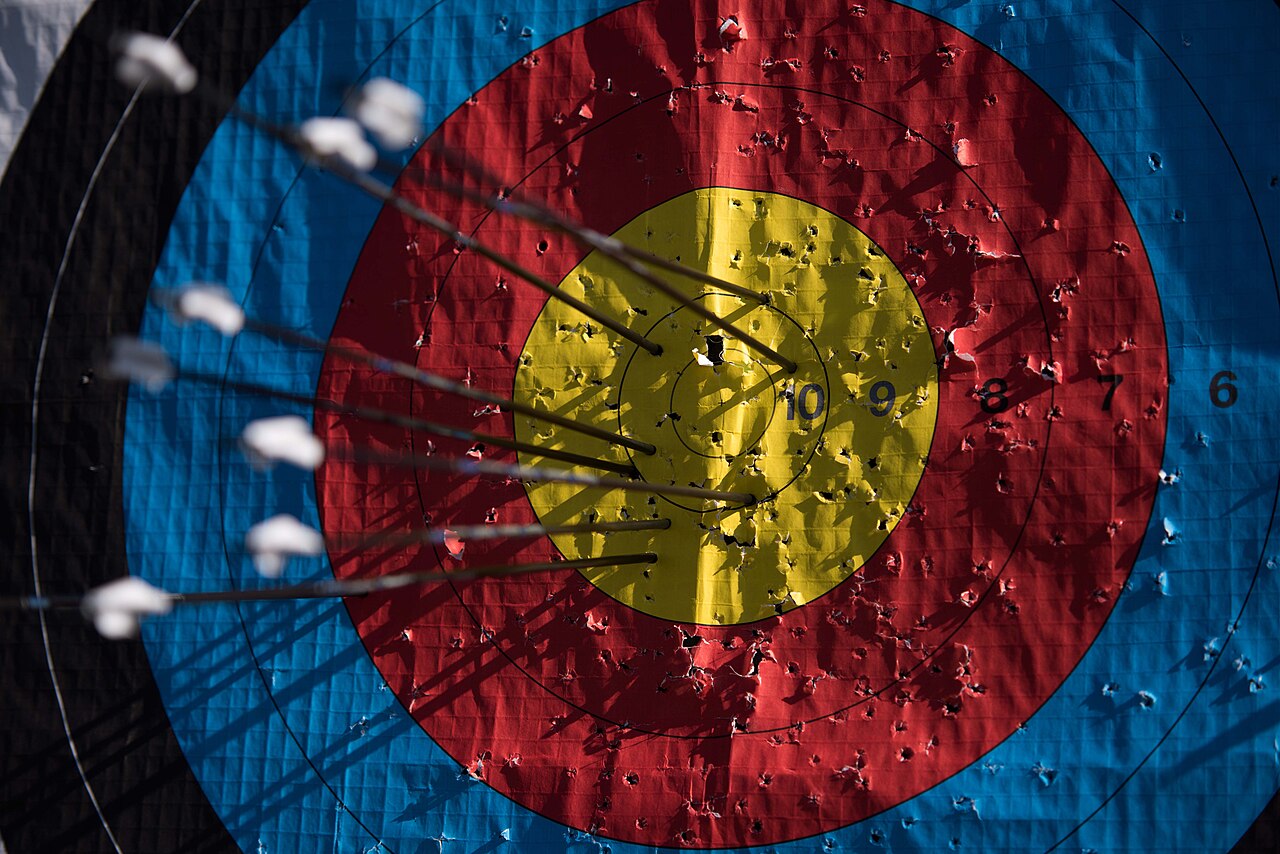
If the two one‑arrow shoot‑off scores are identical, judges measure which arrow is closest to the centre of the target. If arrows are indistinguishable, successive one‑arrow shoot‑offs continue until a winner is established. For teams the closest single arrow (and then second/third) is used. These procedures are in World Archery’s rules and event technical handbooks. ([extranet.worldarchery.sport](https://extranet.worldarchery.sport/documents/index.php/Rules/RuleBookversions/2026-01-27/EN-Book4–2026-01-27Version.pdf?utm_source=openai))
Are shoot‑offs more common in recurve or compound?
Shoot‑offs occur in both disciplines but the underlying scoring format matters. Recurve individual matches use the set system, which can produce more frequent tied set‑point outcomes because sets reset scoring every three arrows; compound events use cumulative scoring but can still reach ties requiring a one‑arrow shoot‑off. The frequency depends on the closeness of competitors rather than the bow type alone. ([worldarchery.sport](https://www.worldarchery.sport/news/99964/14-june-2010-set-system-new-era-world-archery-competition?utm_source=openai))
Can I bet specifically on a shoot‑off winner?
Bookmakers rarely offer a dedicated “shoot‑off winner” market; when they do, liquidity is usually thin and margins large. Traders and exchanges that list niche props may occasionally provide such a market during major events — treat these as speculative, high‑variance bets and check the exact settlement terms first. ([bettingranker.ie](https://bettingranker.ie/sports/archery/?utm_source=openai))
What should I do if a bookmaker’s rules are unclear?
Contact the bookmaker’s customer support and ask for the settlement policy in writing for the exact market and event. If you receive no clear answer, either avoid that market or use a reduced stake size because ambiguity in rule wording creates settlement risk. ([m.vbet.com](https://m.vbet.com/en/help/1476/sportsbook?utm_source=openai))
Responsible gambling note
Betting involves risk. If you choose to wager on archery, stake only what you can afford to lose, set limits, and use bookmaker tools or local support services if you feel your gambling is becoming a problem. This article is educational and does not guarantee profit.
Sources
- World Archery — Target Archery overview and rules. https://www.worldarchery.sport/sport/disciplines/target-archery. ([worldarchery.sport](https://www.worldarchery.sport/sport/disciplines/target-archery?utm_source=openai))
- World Archery / Event technical material and Rule Book excerpts (Book 3 — Target Archery; event organisers’ technical handbooks). Representative files and manuals. ([extranet.worldarchery.sport](https://extranet.worldarchery.sport/documents/index.php/Rules/RuleBookversions/2026-01-27/EN-Book4–2026-01-27Version.pdf?utm_source=openai))
- Olympic Games technical/explanatory guides and results books (Archery) describing set system and single‑arrow shoot‑offs. ([library.olympics.com](https://library.olympics.com/Default/digitalCollection/DigitalCollectionAttachmentDownloadHandler.ashx?documentId=165325&parentDocumentId=165312&utm_source=openai))
- Representative sportsbook rules pages discussing archery settlement and shoot‑off treatment (examples: VBet sportsbook rules and help pages; Bets.io / similar operator rules noting when totals/handicap markets exclude shoot‑offs). Check the operator’s official help/terms pages for exact wording. ([m.vbet.com](https://m.vbet.com/en/help/1476/sportsbook?utm_source=openai))
- Industry and bettor guides describing archery betting availability and market patterns (examples: betting site guides and overviews). These illustrate that archery markets are concentrated around major events. ([bettingranker.ie](https://bettingranker.ie/sports/archery/?utm_source=openai))