Olympic Archery Distance and Target Rules
Olympic Archery Distance and Target Rules
This guide explains the distances, target faces, measurement tolerances and match-format rules that govern Olympic-style target archery — the format you will see at the Olympic Games, World Archery events and most major international tournaments. It also summarises how those technical rules affect bettors and where bookmakers typically offer archery markets.
Quick snapshot
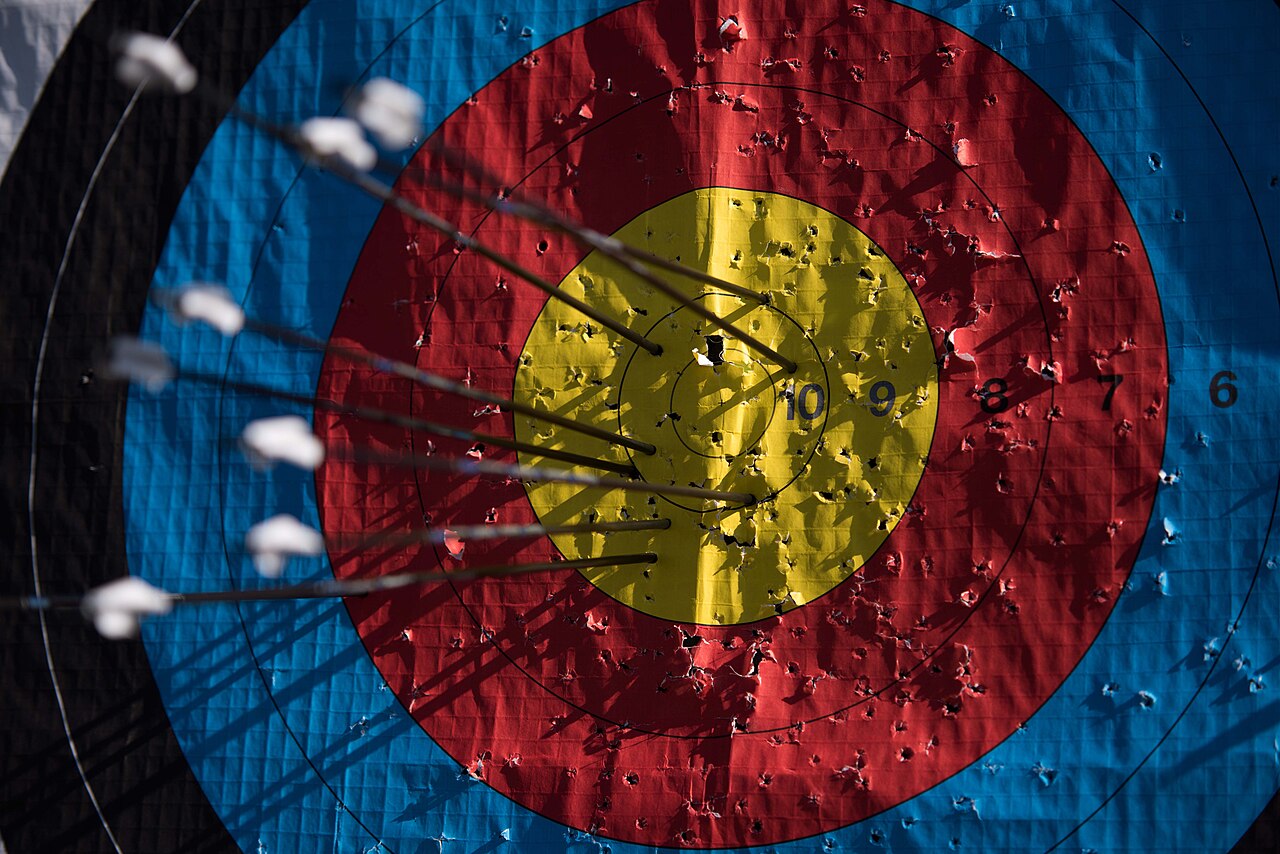
- Olympic (recurve) competition distance: 70 metres; target face: 122 cm diameter; outer 10-ring diameter: 12.2 cm; inner X-ring (for tie-breaks/X-count) 6.1 cm. ([worldarchery.sport](https://www.worldarchery.sport/sport/disciplines/target-archery))
- Standard ranking round: 72 arrows at 70 m (12 ends of 6 arrows). Ranking score seeds all elimination brackets. ([worldarchery.sport](https://www.worldarchery.sport/sport/disciplines/target-archery))
- Match (elimination) format for Olympic recurve: set system — up to 5 sets of 3 arrows; first to 6 set points wins (single-arrow shoot-off if tied). Time: typically 20 seconds per arrow in alternating match play. ([opensourcesports.io](https://opensourcesports.io/rules/archery-world-archery/rules-of-play-5-2-individual-elimination-set-system?utm_source=openai))
- Compound (non‑recurve) international standard: 50 m distance with an 80 cm face (10-ring 8.0 cm); compound was added to the Olympic programme as a mixed‑team event for LA 2028. Expect the compound 50 m/80 cm parameters to apply when it debuts at the Games. ([worldarchery.sport](https://www.worldarchery.sport/sport/disciplines/target-archery))
What the rules say: distances, faces and ring sizes
The definitive source for target dimensions and distances is the World Archery rulebook. For outdoor target (the Olympic discipline) the core specifications used at Olympic and World Championship level are:
| Division | Competition distance | Target face | 10‑ring diameter (outer) | X / inner‑10 (for ranking tiebreaks) |
|---|---|---|---|---|
| Recurve (Olympic format) | 70 m | 122 cm | 12.2 cm | 6.1 cm (X‑ring) |
| Compound (international) | 50 m | 80 cm (usually 6‑ring format for compound) | 8.0 cm (inner 10 for 80 cm face) | 4.0 cm (for some faces / triple faces — see rulebook) |
These diameters and the 10‑zone colour scheme (gold, red, blue, black, white) are explicitly listed in the World Archery Books for target archery and are used at Olympic and World Archery events. The rulebook also gives precise tolerances for measurements and the design of the scoring zones. ([extranet.worldarchery.sport](https://extranet.worldarchery.sport/documents/index.php/Rules/RuleBookversions/2026-01-27/EN-Book2–2026-01-27Version.pdf))
Butt/face setup, angles and sightlines
Target butts at long distances (30–70 m) are set with a slight backward tilt — World Archery specifies butts be placed at an angle of about 10–15° from vertical for long distances (short distances have smaller angles). All butts in a line must be at the same angle so that target centres align visually for competitors. Distance tolerances for marked long‑range distances (90, 70, 60 m) are ±30 cm; shorter distances have tighter tolerances. ([extranet.worldarchery.sport](https://extranet.worldarchery.sport/documents/index.php/Rules/RuleBookversions/2026-01-27/EN-Book2–2026-01-27Version.pdf))
Organisers must also make the full scoring zone visible from a specified eye‑level height; the rulebook describes sightline and visibility requirements so archers always see the whole target picture. These setup details matter for event fairness and for bettors who watch live — a slight change in butt angle or target orientation can alter perceived wind and lighting effects. ([extranet.worldarchery.sport](https://extranet.worldarchery.sport/documents/index.php/Rules/RuleBookversions/2026-01-27/EN-Book2–2026-01-27Version.pdf))
Competition format that uses these distances
1) Ranking (qualification) round
The Olympic-style ranking round is the 70 m “72‑arrow” round for recurve: each archer shoots 72 arrows (12 ends of 6 arrows) at the 122 cm target face. The total (maximum 720) orders archers for the elimination brackets and also determines team and mixed‑team seeding (teams are seeded by aggregate of three archers; mixed teams by highest man + woman from a country). World Archery provides the official procedure for tie‑breaking (number of 10s, number of Xs, etc.). ([worldarchery.sport](https://www.worldarchery.sport/sport/disciplines/target-archery))
2) Individual elimination — the set system
Olympic elimination matches use the “set system” for recurve:
- Each set: 3 arrows per archer.
- Set scoring: set winner gets 2 points; tie = 1 point each.
- First archer to 6 set points wins (match can finish 6–0, 6–2, 6–4 or go to 5 sets and a 5–5 tie).
- If a match is 5–5 after five sets, a single‑arrow shoot‑off decides the winner — the arrow closest to the centre wins. If shoot‑off distances are equal, judges follow further tie procedures. ([opensourcesports.io](https://opensourcesports.io/rules/archery-world-archery/rules-of-play-5-2-individual-elimination-set-system?utm_source=openai))
Time control: in alternating match play archers typically have 20 seconds per arrow; individual qualification ends often use longer windows per end (World Archery rules describe precise timing regimes for qualification versus match play, and these have been standardised for World Ranking events). ([extranet.worldarchery.sport](https://extranet.worldarchery.sport/documents/index.php/Rules/RuleBookversions/2026-01-27/EN-Book3–Differences–2026-01-27Version.pdf?utm_source=openai))
3) Team and mixed‑team matches
Team matches (three archers) and mixed teams (one man + one woman) also use set scoring but with different arrow counts per set (for example, team sets commonly use 6 arrows per set — two arrows per archer — and mixed teams use 4 arrows per set). The first team to the required set points wins (team/mixed team scoring thresholds are defined in the rulebook). See World Archery event documentation for exact set‑point rules used at a given tournament. ([worldarchery.sport](https://www.worldarchery.sport/sport/disciplines/target-archery))
Scoring details and line‑cutters
An arrow touching the line between two rings is awarded the higher score — judges inspect line‑cutting with magnifiers if necessary. The 10‑ring and X counts are used for ranking ties (X is an inner 10 measured on the target face). The rulebook lists exact diameters for each scoring zone and the permitted tolerances; for example, on the 122 cm face the 10‑ring outer diameter is 12.2 cm and the inner X is 6.1 cm. Accurate measurement, certified target faces and authorised manufacturers are required at World Archery events. ([extranet.worldarchery.sport](https://extranet.worldarchery.sport/documents/index.php/Rules/RuleBookversions/2026-01-27/EN-Book2–2026-01-27Version.pdf))
What this means for bettors — markets and when they appear
Archery is a niche market in most bookmakers’ product lines but becomes well covered and liquid around major international competitions (Olympic Games, World Archery Championships, Hyundai Archery World Cup stages and major continental championships). During those events, many leading sportsbooks list pre‑match and in‑play markets: match winner, set winner/handicap, total sets, stage/event winner and medal‑finish futures. Outside major events, markets are sporadic. These patterns have been visible in bookmakers’ market provision at Paris 2024 and recent World Championships. ([entaingroup.com](https://www.entaingroup.com/news-insights/latest-news/2024/olympics-2024-record-interest-in-betting-on-the-olympics-for-entain/?utm_source=openai))
Practical takeaways for archery bettors:
- Expect the deepest market depth and most consistent in‑play coverage during the Olympics and World Championships. Bookmakers often expand archery lines and open in‑play markets only for these events. ([bettingranker.co.uk](https://bettingranker.co.uk/sports/archery/?utm_source=openai))
- Live/in‑play markets may suspend frequently between sets or ends while odds are recalculated. Successful in‑play archery trading requires a bookmaker that resumes markets quickly and supplies a live score feed or animated tracker. Reviews of recent events show bet365 and Unibet among operators that resume markets promptly; exchanges (Betfair) can offer superior pricing when liquidity is present. Use multiple sources (bookmaker + exchange) for price discovery. ([livepanthers.com](https://livepanthers.com/live-betting/archery/?utm_source=openai))
- Bookmakers’ settlement rules vary: some treat extra arrows (shoot‑offs) and disqualifications differently, and house rules list settlement procedures. If a market you back is affected by a change (DNS/DQ), check the operator’s published rules before staking. Examples of house rules referencing archery settlement are publicly available at large operators. ([support.skybet.com](https://support.skybet.com/app/answers/detail/archery-rules/?utm_source=openai))