Vegas Shoot Format Explained
Vegas Shoot Format Explained
By the senior English archery and sports‑betting editor, SaskArchery.com — a practical guide for archers, coaches and archery bettors. This article explains how The Vegas Shoot is run today, the competition and shoot‑off mechanics that matter to bettors, which markets you should expect (and when), and how to read form and history without being misled by a one‑day spectacle.
What the Vegas Shoot is (at a glance)
- Event type: The world’s largest indoor target archery tournament, run under NFAA/The Vegas Shoot event rules.
- Venue timing: The event runs over three competition days for most Championship divisions (Friday–Sunday) with practice days and trade show activities around it; specific dates and session details are published each year. For example, the 2026 event was staged in late March. (ianseo.net)
- Distance and target: All divisions shoot from 20 yards on the indoor Vegas target faces (40 cm single‑spot or 40 cm three‑spot, depending on division). (thevegasshoot.com)
- Why it matters: The Vegas Shoot combines huge entry numbers, open entry for pros and amateurs, high prize money in Championship divisions, and high‑pressure shoot‑offs — the mix that creates both sporting drama and occasional betting interest. (thevegasshoot.com)
Detailed format — rounds, scoring and targets
Rounds and arrows
Each daily round consists of 10 ends of 3 arrows (30 arrows per day). Most Championship and Flight divisions shoot three rounds (Friday, Saturday, Sunday), producing a 90‑arrow total for the championship ranking (maximum possible score = 900). Junior (non‑championship) divisions shoot two rounds (one on Friday and one on Saturday). A 2‑minute clock per end applies. These are codified in the official event rules. (thevegasshoot.com)
Targets and scoring
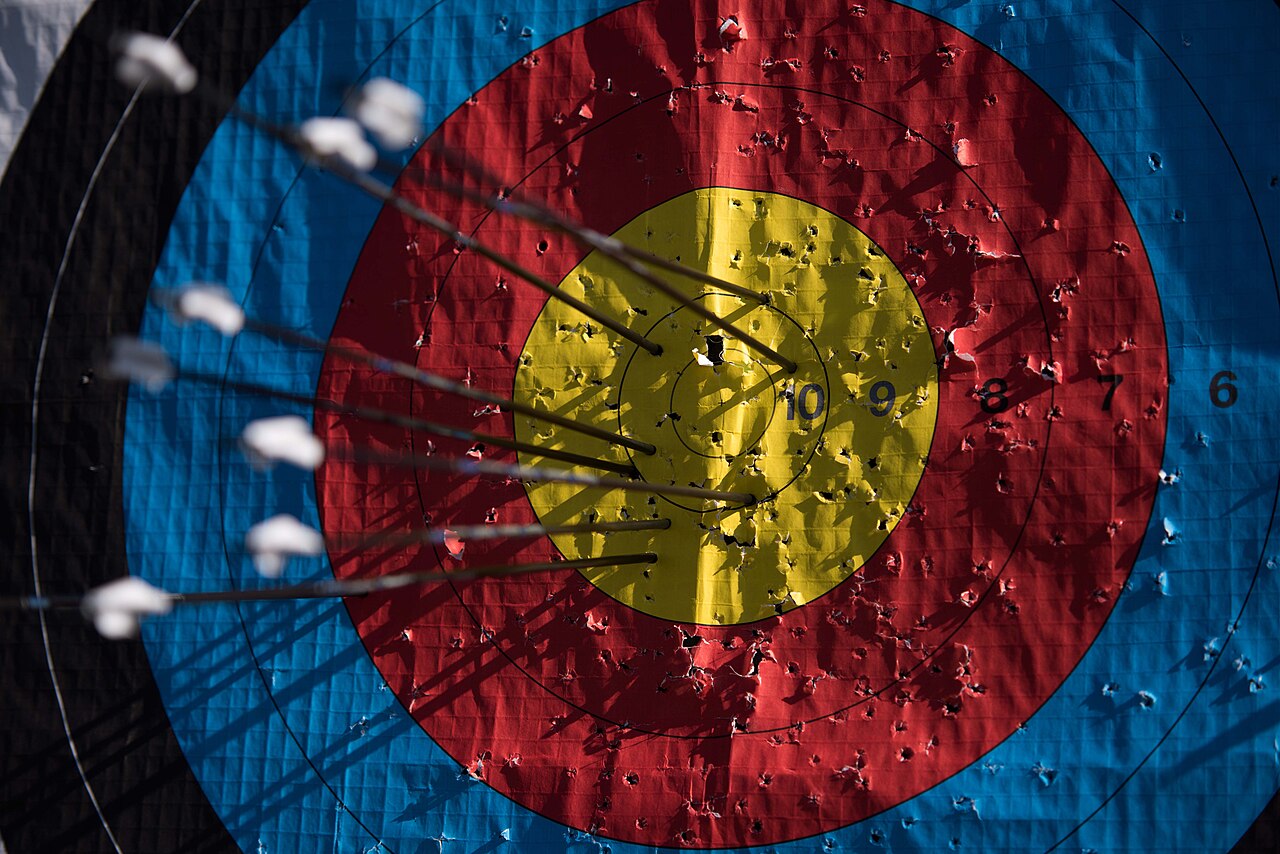
- Primary faces: 40 cm Vegas three‑spot face (gold/red/blue rings scored 10–6) or the 40 cm single‑spot face with 10–1 scoring. Some junior and non‑championship classes may use 60 cm faces; check the event rules for your division. (thevegasshoot.com)
- Three‑spot rules: In Championship divisions only one arrow is allowed per spot on a three‑spot face; multiple arrows in the same spot attract penalties. Targets are replaced after the fifth end in Championship divisions. (thevegasshoot.com)
- Tie resolution: Ties for first, second and third in Championship divisions are settled by cumulative score first, then an arena shoot‑off if required (sudden death, end‑by‑end on the three‑spot with only X‑ring scoring 10 in the shoot‑off). Other ties (Flights, most junior ties) use x‑count and score sequences; prize splitting is applied where specified. (thevegasshoot.com)
Special shoot‑off formats you should know
- 900 Club Championship shoot‑offs — The famous “900” (90 arrows, perfect score) earns a guaranteed minimum payout and a place in the championship shoot‑off. If multiple archers reach identical top totals (including 900s), they move to the stadium shoot‑off to decide title positions. The shoot‑off is sudden death on the small 10/X target under bright arena conditions. (thevegasshoot.com)
- “Lucky Dog” (899) shoot‑off — The event runs a mechanism that can allow a 899 scorer to challenge into the 900’s shoot‑off in selected divisions (see official rules for eligibility and timing). (thevegasshoot.com)
- “$10K‑A‑Day” winner‑takes‑all — A paid add‑on gives qualifying championship archers the chance to enter a winner‑takes‑all shoot‑off if they shoot a 300 on an individual day; the shoot‑off procedure uses the same sudden‑death rules as other shoot‑offs. Expect publicity and, sometimes, special props or novelty markets around these add‑ons. (thevegasshoot.com)
Schedule prize structure (what bettors should note)
Prize pools and the exact schedule change year‑to‑year. In 2026 the organisers published detailed payouts for Championship and Flight divisions and confirmed guarantees such as a minimum prize for any Championship archer scoring a perfect 900. The majority of Championship divisions shoot three rounds; Junior/Collegiate programmes have their own short‑format scoring windows for scholarships. Always confirm the current year’s published payouts and prize eligibility (age limits for cash prizes, scholarship rules, and attendance requirements for podiums) before placing any bets that depend on payout structure. (thevegasshoot.com)
Historical patterns and what they mean for betting
Patterns that repeat at Vegas and are useful to bettors:
- High frequency of near‑perfect scores: Because the event is indoor at 20 yards and uses large 3‑spot faces, many top compound shooters post 300s (per day) and 900s (over three days) more often than you’d expect in outdoor competition. This makes “perfect score” props (for the day or the event) attractive to some bettors but also hard to value because they can attract large long‑shot interest. (thevegasshoot.com)
- Experience and arena composure win shoot‑offs: The title is frequently decided in stadium shoot‑offs. Archers with prior shoot‑off success and big‑stage experience (e.g., repeat high finishers like Mike Schloesser, Tanja Gellenthien, Paige Pearce and young phenoms such as Liko Arreola in recent years) are better bets in shoot‑off scenarios. Use shoot‑off history as a specific adjustment to raw pre‑match form. (worldarchery.sport)
- Open‑entry volatility: Vegas’ open nature lets amateurs and pros enter the same flights. That increases variance and creates “value” opportunities in flights and side props — especially when a less well‑known but in‑form archer tops a Flight that the books haven’t priced tightly. (thevegasshoot.com)
Notable contenders — who to watch (research tips)
Do not rely on a static list of “favorites.” Instead, build a short list from these sources every year:
- Recent Vegas top placings and 900 club entries — the event publishes full results and IANSEO session data (start lists, finalists). That’s the first place to check for confirmed entries and literal match history at this venue. (ianseo.net)
- World Archery and NFAA season form — World Archery reports on major titles, and NFAA communications summarise Vegas‑specific winners and shoot‑off outcomes. Use those to identify elite competitors who travel with proven Vegas form (e.g., repeated 900 scorers). (worldarchery.sport)
- Recent indoor circuit / Lancaster / national events — many Vegas champions show the same strong indoor form across the winter calendar; a short list that includes consistent indoor 300s and shoot‑off wins is usually more reliable than a single headline result. (thevegasshoot.com)
What betting markets you can expect at Vegas (and how reliable they are)
Archery betting markets are event‑dependent and not guaranteed. Major bookmakers only offer archery lines for big international events (Olympics, World Cup/World Championships) and may add specialist lines around high‑profile indoor events like Vegas — but availability varies year to year and by jurisdiction. Independent bookmaker researchers and sportsbook reviewers note that coverage is limited and often shallow outside the biggest events. Always check the bookmaker for live availability before assuming a market exists. (livepanthers.com)
Markets that sometimes appear around The Vegas Shoot (if a bookmaker covers it):
- Outright winner — Championship divisions (Compound Open, Recurve, etc.). Books may offer only a winner market (shallow) rather than full match markets. Reliability depends on bookmaker appetite. (bettingranker.co.uk)
- Day‑score props — whether an individual shoots a 300 on a single day; these are natural given the event’s structure and the $10K‑A‑Day publicity. If offered, expect long odds and high bookmaker margin. (thevegasshoot.com)
- Perfect 900 prop (any archer to shoot 900) — sometimes offered as a novelty prop by niche sites around the event; historically rare but not impossible. Value here requires careful research into the entry list and recent form. (thevegasshoot.com)
- Shoot‑off or arena final winner — some sites may offer a market for the winner of the championship shoot‑off if that stage is live‑streamed and bookmakers accept the market. These may be priced as quick in‑play markets. (thevegasshoot.com)
- Flight winner / top‑10 finish — offered sporadically by more specialised sportsbooks or exchanges; lighter liquidity, wider margins. (sbo.net)
Recommended approach for archery bettors (SaskArchery guidance)
- Verify market availability before you plan a bet. Some mainstream bookmakers (especially in the UK/Europe) sporadically open archery markets for World Archery and other major fixtures, but coverage for Vegas is not guaranteed. Use pre‑event checks and watch for live additions once the event is underway. (livepanthers.com)
- Use event‑specific data: IANSEO results pages, The Vegas Shoot official results and World Archery reports are your primary data sources for entry lists, historical shoot‑off records, and 900‑club membership. Those facts matter more than seasonal ranking in an outdoor circuit. (ianseo.net)
- Compare bookmakers and exchanges: where available, a betting exchange (if you can access one) often provides the best prices in small‑volume markets; fixed‑odds books may hold 5–10%+ margins on niche lines. Specialist betting reviews list operators that historically provide archery markets; use them as a starting point but re‑verify on the day. (livepanthers.com)
- Adjust for shoot‑off skill: when the field includes multiple 900s or 300‑per‑day shooters, weigh an archer’s shoot‑off record and arena experience heavily — that’s where titles are decided. Historical shoot‑off winners have repeatedly come from archers with strong composure under lights. (worldarchery.sport)
- Bankroll and be selective: archery markets are niche, often illiquid, and more prone to volatility than mainstream sports. Smaller stakes and a clear approach to value will serve you better than over‑trading novelty props. Add a responsible‑gambling limit and never bet more than you can afford to lose.
Bookmaker notes (what to expect from operators)
Research summaries and bookmaker reviews indicate that:
- Major, regulated bookmakers sometimes open archery markets around the Olympics, World Championships and World Cup stages; this extends occasionally to big indoor showcases like The Vegas Shoot if there’s commercial demand. Bet provision is therefore ad‑hoc and regionally limited. (livepanthers.com)
- Several smaller or specialist sportsbooks and betting exchanges list archery markets more consistently, but they vary widely in rules, limits and liquidity — always read terms for voidance, settlement and event cancellation clauses. (sbo.net)
- When you find markets, check settlement rules (shoot‑offs, ties, partially completed events) and eligibility (age limits, division definitions) carefully — Vegas rules include specific provisions for juniors, scholarships and the Lucky Dog mechanism that affect prize outcomes and therefore how a bookmaker must settle bets. (thevegasshoot.com)
Responsible gambling note: Betting should be for entertainment. If you choose to bet on archery, set limits and use regulated operators in your jurisdiction. This page does not provide financial advice.
Quick reference table: key event facts
| Item | Detail |
|---|---|
| Distance | 20 yards for all divisions (indoor) |
| Daily round | 10 ends × 3 arrows = 30 arrows |
| Championship total | 3 days × 30 arrows = 90 arrows (max 900) |
| Targets | 40 cm single‑spot or 40 cm three‑spot Vegas face; juniors sometimes use 60 cm faces |
| Shoot‑offs | Sudden‑death arena shoot‑offs; X‑ring scoring rules apply to break ties in championship shoot‑offs |
| Prize guarantees | 900 score guarantees a minimum payout in Championship divisions (published annually) |
Five practical pre‑bet checks for The Vegas Shoot
- Is the market open (Check your bookmaker and any exchange for Vegas Shoot markets.) (livepanthers.com)
- Who is confirmed on the entry list (Use the IANSEO participant list and The Vegas Shoot start lists.) (ianseo.net)
- Has the bookmaker published settlement rules for shoot‑offs / ties and refunds (Read the operator’s rules.)
- Recent indoor form: last two months’ indoor results, Lancaster and national indoors matter more than outdoor 70 m form. (thevegasshoot.com)
- Liquidity: will your stake size move the market For niche archery markets, it often will — consider an exchange or small stakes. (sbo.net)
FAQ
Q: How many arrows do shooters fire at Vegas across the whole event
A: Championship divisions shoot three rounds of 30 arrows (10 ends × 3 arrows) — a total of 90 arrows. Junior non‑championship divisions shoot two rounds (60 arrows). (thevegasshoot.com)
Q: Can an archer who scores 899 still win the Vegas title
A: Yes — the rules include a “Lucky Dog” mechanism that can allow a qualified 899 to shoot off for a place with the 900s in selected situations. The exact procedure and timing are published in the event rules for that year. (thevegasshoot.com)
Q: Do sportsbooks always offer bets on The Vegas Shoot
A: No — archery markets are offered on an ad‑hoc basis, concentrated around the biggest international events; some bookmakers and exchanges open lines for the Vegas Shoot when there is commercial demand. Always check market availability before assuming a bet is possible. (livepanthers.com)
Q: What are the most likely prop markets bookmakers will list
A: If a bookmaker covers the event you can expect shallow markets: outright winner, day‑300 prop, “any 900” prop, and sometimes shoot‑off winner lines. Markets and depth vary widely by operator. (thevegasshoot.com)
Q: How much should I weight prior Vegas results vs. world rankings
A: For Vegas‑format events, give greater weight to recent indoor performance and previous Vegas experience (shoot‑off history, 300/900 frequency), then supplement with world ranking where appropriate — outdoor ranking alone is a weaker predictor for this indoor