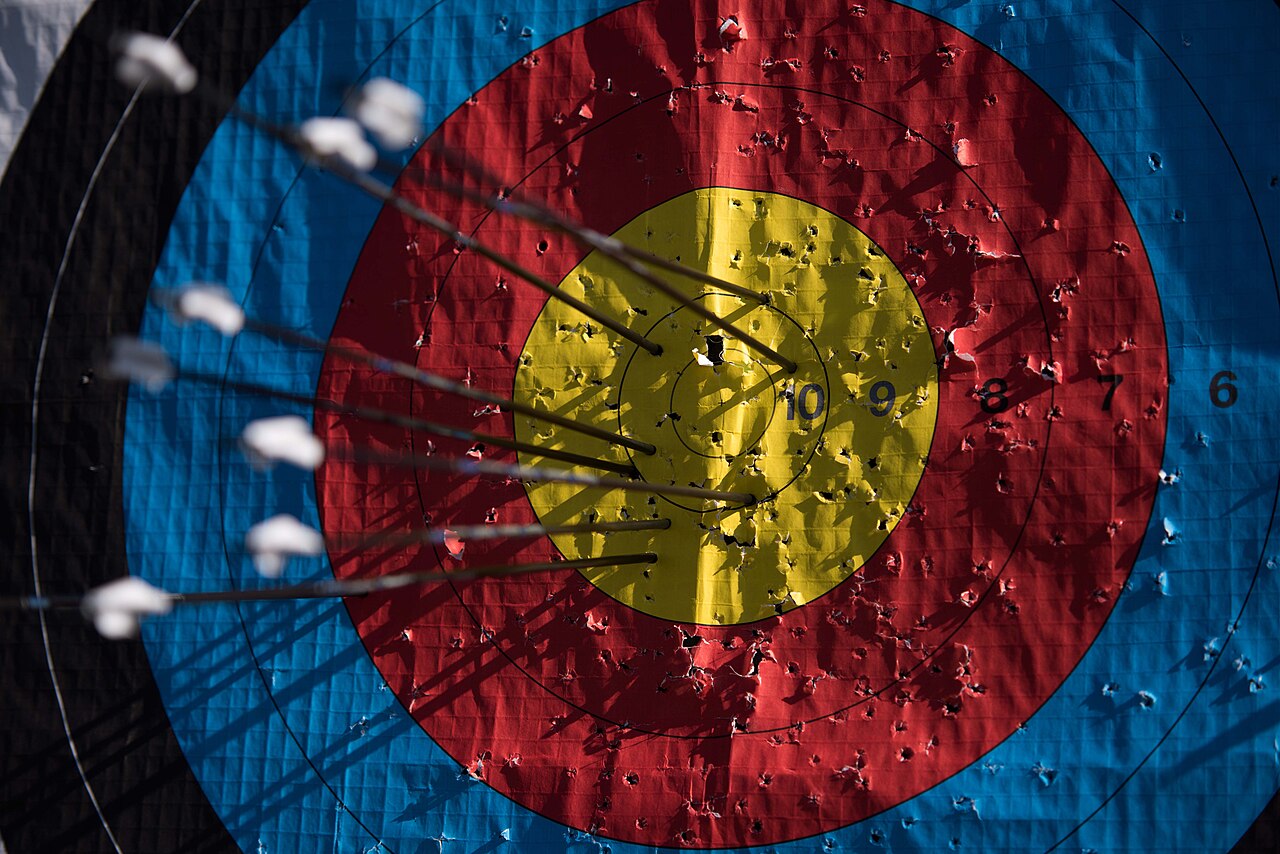
Perfect Scores in Archery
“Perfect score” in archery is a deceptively simple phrase: it means the maximum possible total in whatever format is being shot. What that maximum is — and how meaningful it is in practice — depends entirely on the round, the target face, the distance and whether matchplay uses cumulative or set scoring. This article defines the common formats, shows which perfect scores actually exist in competition, summarises notable historical examples, and explains what perfect rounds do — and do not — tell a coach, statistician or archery bettor. Wherever possible we reference primary competition sources and World Archery records so you can verify the numbers yourself.
What “perfect” means across formats
Archery uses a small set of standard competitive formats; each has a different maximum (perfect) score. The key ones for target archery are:
- WA 720 / 70 m (outdoor ranking round): 72 arrows × 10 points = 720 maximum. This is the standard Olympic-style qualification round for recurve (70 m) and the 72-arrow ranking format used across major international events. (assets.contentstack.io)
- Indoor 18 m / WA 18m round: 60 arrows × 10 = 600 maximum. This is the standard indoor qualifying round used by World Archery (and where the indoor “perfect 600” exists). (assets.contentstack.io)
- Matchplay mini-rounds:
- 12-arrow (recurve set end) — in recurve individual matches arrows are shot in sets; 3 arrows per set (10 is maximum per arrow) and the match winner is determined by set points rather than a single “perfect” match total, but a 12-arrow clean (12×10 = 120) is the arithmetic maximum for a 4-end match segment. (Formats vary by event.)
- 15-arrow (compound match): 15 arrows × 10 = 150 maximum for a standard five-end compound match; World Archery ratifies 15-arrow match records. (assets.contentstack.io)
- Other target-round maximums used at club level — 900 round (90 arrows across 3 distances) has a 900 maximum, Vegas/300-style rounds have a 300 maximum, etc. See a scoring guide for the full list. (archerybuddy.app)
Because the inner-10 (the “X” ring) is used as a tiebreaker, some published results show scores like “150 13X” (meaning 150 points with 13 inner-10s). An X does not increase the point total; it’s only used where tiebreak procedures or record X-counts matter. (worldarchery.sport)
World records and the real-life “perfects”
Two important distinctions matter when we talk about perfects and records: (1) “perfect” as the numeric maximum for the round (e.g., 720, 600, 150) and (2) the actual documented highest competition totals (world records). For many international target formats the numeric maximum has never been reached in real competition; for others it has and been ratified as a world record.
| Format | Numeric maximum | Top documented (world) score | Notes / example holders |
|---|---|---|---|
| 70 m, 72-arrow ranking (WA 720) | 720 | 709 (Kim Woo-jin, 15 Sep 2025); previous recognised world record 702 (Brady Ellison, 7 Aug 2019). | Kim’s 709 in a Korean national championships broke the long-standing elite barrier; prior to 2025 the record stood at 702. These records are ratified and documented by World Archery. (worldarchery.sport) |
| Indoor 18 m, 60-arrow qualifying | 600 | 600 — achieved multiple times (Mike Schloesser was the first in international competition, Nîmes 2015; others have matched it since). | The perfect 600 is a recognisable, ratified achievement in indoor compound qualifying; World Archery reports and archives the occasions. (worldarchery.sport) |
| 15-arrow compound match | 150 | 150 (many occurrences; World Archery tracks X-count variants; Mathias Fullerton’s 150 with 13X was ratified in 2024). | Matchplay records include both the point total and X-counts when equalling the numeric maximum. (worldarchery.sport) |
| Club/other rounds (e.g. 900 round) | varies (900 for 90-arrow 60/50/40m round) | rarely relevant to World Archery records; club bests exist | These are important for development and local ranking but are not central to elite international record lists. (archerybuddy.app) |
Highlights: who shot what
- Kim Woo‑jin — 709 in the 70 m, 72-arrow round at a Korean national championship (qualifying round shot 15 Sep 2025); World Archery covered the performance and noted it shattered the prior recognised mark. This is currently the leading documented qualifying total. (worldarchery.sport)
- Brady Ellison — set a 702 world record in the 72-arrow 70 m ranking round at the Lima Pan American Games (7 Aug 2019); that record stood until 2025. (worldarchery.sport)
- Mike Schloesser — first archer to shoot a perfect 600 in an international indoor 60-arrow qualifying round (Nîmes 2015); that perfect 600 remains a benchmark that others have since matched. (worldarchery.sport)
- Mathias Fullerton — shot a perfect 150 in a 15-arrow compound match with 13 Xs; World Archery ratified his 15‑arrow match record in 2024. (worldarchery.sport)
- Nicolas Girard — shot a 600 during the 2025 indoor season (GT Open, Strassen), underlining that perfect 600s continue to appear at high-level indoor events. (worldarchery.sport)
Why some “perfects” are possible and others are vanishingly unlikely
Two groups of factors determine whether a numeric perfect is practically achievable:
- Physical/target factors. Indoor 18 m compound competition uses small distances and relatively forgiving atmospheric conditions (no wind), and compound equipment and sights are extraordinarily precise. That combination makes a 600 possible, and it has happened. By contrast, 70 m outdoor shooting is at long range on a 122 cm face; wind and light alter each arrow and make sustained perfection across 72 arrows far harder. That is why the 720 maximum at 70 m remains theoretical rather than achieved. (assets.contentstack.io)
- Format and scoring. Matchplay can use sets (recurve) or cumulative scoring (compound). In set play an archer can win despite not shooting numerically “perfect” because set points, pressure moments and shoot-offs matter. In a 15-arrow compound match a 150 is possible and has been recorded; those performances are recorded with X-counts for tiebreak and record detail. (assets.contentstack.io)
- Statistical opportunity. A perfect round requires a run of consistent excellence across many attempts. Indoor qualifying (60 arrows) presents fewer arrows to string together than a 72-arrow outdoor ranking; smaller sample sizes make mathematical perfection marginally easier to attain. Conversely, 72 outdoor arrows give both more opportunities for error and more environmental variability. (worldarchery.sport)
What perfect scores tell you — and what they don’t
From a coaching or statistical perspective, a perfect or near-perfect qualifying round is a strong signal of technical execution, equipment setup and mental control on that day. But it is not a standalone forecast that the archer will win every match that follows. Reasons:
- Matchplay dynamics: elimination rounds introduce direct opponent pressure, alternating shooting order, and shoot-offs — all of which can change outcomes independently of a pure qualifying total. A high qualifying