World Archery Championships Format Explained
World Archery Championships Format Explained
As the senior English archery and sports-betting editor for SaskArchery.com, this guide explains exactly how the World Archery Championships are structured, what formats and distances competitors use, how qualification and elimination phases work, and which betting markets you can expect around major events. The piece is written for archery fans, athletes, statisticians and bettors who need a clear, source-verified reference they can use before a world championships or when markets appear on sportsbooks.
At a glance: the essentials
- Discipline: Outdoor target archery (recurve and compound divisions).
- Qualification round: 72-arrow ranking round used to seed matchplay (individual and team seeds derived from these scores).
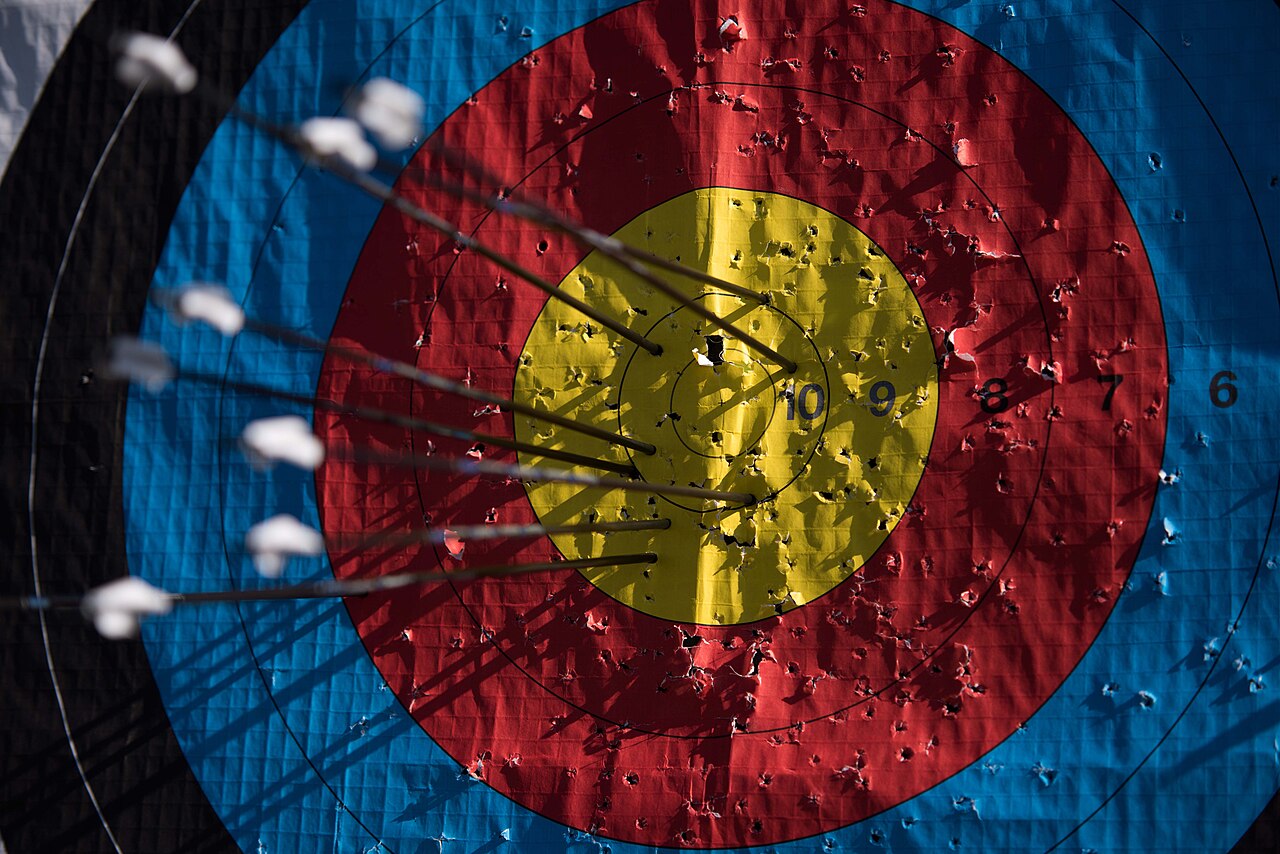
- Distances and targets: Recurve — 70 metres on a 122 cm face; Compound — 50 metres on an 80 cm face (outer rings often removed).
- Matchplay: Recurve uses the set system (sets of 3 arrows for individuals); compound uses cumulative scoring (fixed number of arrows per match).
- Bracket/cutoff norms: Individual fields are normally cut to a maximum (commonly the top 104 advance in international events); team/mixed-team brackets are often cut to top 24 teams. Exact numbers can vary by event organiser but the 72-arrow ranking + bracket seeding is constant at World Archery events. (worldarchery.sport)
What happens on qualification day
Every World Archery Championships begins with the single 72‑arrow qualification round (sometimes called the Single 720 / 72-arrow round). Each archer shoots 72 arrows (ends prescribed by the event rules) and is ranked on total score. Those rankings seed the elimination brackets for individual events and are also used to form the national team and mixed‑team seeds (by combining the top three same‑gender scores for teams, and best man + best woman for mixed teams). The ranking round therefore matters for both individual matchups and team/mixed-team qualification. (worldarchery.sport)
Why the ranking round matters for bettors
Qualification scores are objective measures of form on the day and are commonly used by bookmakers when pricing pre-elimination outrights and head‑to‑head markets. A high qualification seed both improves bracket draw (fewer early heavyweight matchups) and signals an archer in strong scoring rhythm — useful context for short-term markets like match winner or set handicap.
Distances, target faces and equipment
| Division | Distance | Target face | Typical qualification format |
|---|---|---|---|
| Recurve | 70 m | 122 cm face (10‑ring 12.2 cm) | 72 arrows (used to seed matchplay) |
| Compound | 50 m | 80 cm face (10‑ring ~8 cm; outer rings often removed) | 72 arrows (50 m) — then seeded to cumulative matchplay |
These specifications are set at international level and are consistent across World Archery target events. They affect scoring variance (the smaller compound 10‑ring produces tighter scores) and therefore influence how bookmakers price markets where margins are thin. (worldarchery.sport)
Matchplay: Set system (recurve) vs cumulative (compound)
World Archery uses two distinct match scoring systems — the set system for recurve and cumulative scoring for compound. Knowing which applies is essential for understanding match dynamics and for bettors who trade in-play or take set-level markets.
Recurve — the set system
- Individuals: Best-of sets; each set is 3 arrows per archer. The first archer to reach 6 set points wins the match (2 points for a set win, 1 for a tie).
- Teams (3 archers): Sets of 6 arrows total (2 per archer); mixed teams (man+woman) use sets of 4 arrows (2 each). Team/mixed matches are decided to a target of 5 set points.
- The set system rewards shooting well at key moments; because a bad set can be recovered, it increases comeback probability compared with pure cumulative matches. (worldarchery.sport)
Compound — cumulative scoring
- Individuals: Matches consist of 15 arrows, shot as five ends of three arrows. The higher total wins.
- Mixed teams and full teams: Matches are set at fixed arrow counts (for example, mixed-team matches typically use 16 arrows — 8 per gender — and team matches 24 arrows), split evenly among team members.
- Cumulative scoring rewards absolute precision and consistency across the full match; falling behind early is harder to erase than under the set system. (worldarchery.sport)
Tactical implication for bettors
Set-system matches produce more frequent scoring “resets” (after each set) so in-play odds often swing more dramatically between ends — bookmakers will commonly suspend markets during ends to reprice. In cumulative matches the total score trajectory is more gradual, and market suspensions are generally driven by the same need to recalc after ends but the betting patterns differ. Experienced archery bettors account for these behavioral differences when choosing markets (set winner / end winner vs match winner / total points). (livepanthers.com)
Tiebreaks and shoot-offs
If a match is tied after the regulation sets or arrows, World Archery uses shoot-off procedures.
- Individual ties: One-arrow shoot-off — the archer whose single arrow is closest to the centre wins. If it cannot be separated, another shoot-off may be called.
- Team or mixed-team ties: Each team archer shoots one arrow; the team with the higher total wins. If the totals remain tied, the team whose arrow is closest to centre wins (compare next closest arrows if required). (worldarchery.sport)
Bookmakers that offer markets which can be influenced by shoot-offs should state explicitly in their rules whether extra arrows count (most major operators do count shoot-off arrows when settling match markets). Check the operator’s sport rules before staking a wager. (help.bet365.com)
Elimination brackets, byes and common cutoffs
After qualification the field is seeded into single‑elimination brackets. In many World Archery events the total advancing field is capped (commonly at 104 for individuals) which creates byes for the highest seeds into later rounds; team and mixed-team competitions are often capped at 24 for elimination brackets. These procedural cutoffs are part of how organisers keep the schedule manageable for a multi‑day event and are consistently applied across World Archery championships. Always check the event bulletin for the precise bracket size used at a specific championships — organisers may vary the cutoff if the entry list size requires it. (worldarchery.sport)
Typical event timeline (how a World Championships week looks)
- Day 1: Qualification round (72 arrows) — seeds decided.
- Day 2: Team elimination rounds (team brackets and some mixed-team matchplay).
- Day 3: Individual elimination rounds through to final‑eight (timing varies by organiser).
- Final days: Team finals, then compound and recurve finals on designated days (event schedules vary; example schedules from recent worlds show a dedicated day for compound finals and another for recurve finals). (worldarchery.sport)
World Championships and Olympic quota places
At certain World Archery Championships the event also distributes Olympic quota places (this depends on the Olympic cycle). Historically the championships have been a primary route to secure early Olympic quotas for nations (team and individual quotas), and that increases both media attention and bookmaker interest because Olympic qualification raises the competitive stakes. Always verify whether the edition you’re following carries Olympic quotas — World Archery publishes this in the event information. (worldarchery.sport)
Which betting markets typically appear — and when
Archery markets are event-dependent: most major operators list archery markets for the World Archery Championships, Hyundai Archery World Cup stages and the Olympic Games. Typical markets you can expect around these major events include:
- Match winner / moneyline (individual match winner).
- Set winner / set handicap / next set winner (recurve-specific markets).
- Total points or total sets (over/under on cumulative or set totals).
- Outright winner (tournament winner) and podium (top‑3) markets.
- Props (first to X points, shoot-off occurrence, highest single‑end score) — these are rarer and only offered by a subset of operators during the biggest events.
Operators with consistent archery coverage include mainstream, globally active bookmakers; for an example of an operator with explicit archery rules and settlement guidance see bet365’s archery help pages. Independent reviews and market-watch reporting show that archery markets are concentrated around Olympic and World Championship windows — coverage drops off for smaller or regional events. If you plan to bet archery regularly, maintain accounts at multiple bookmakers and a betting exchange to ensure access and pricing options during major windows. (help.bet365.com)
Evaluating a sportsbook from an archery‑bettor perspective
When assessing a bookmaker for archery markets consider these criteria:
- Market availability: Does the operator list World Championships, World Cup stages, Olympics Is coverage live/in-play during elimination rounds
- Market variety: Does the book offer set-level markets and props (useful for trading during elimination ends)
- Market suspension behaviour: How long does the operator suspend markets between ends Shorter suspensions are better for reactive in-play traders (industry testing identifies some operators that resume markets faster than others). (livepanthers.com)
- Settlement rules: Are shoot-offs and extra arrows explicitly covered in the operator’s sport rules (this avoids disputes on match markets) Major operators publish these rules in their help/settlement pages. (help.bet365.com)
- Streaming / live data: A live scoreboard, video stream, or timely official scoring feed reduces latency risk and improves in-play value — many books do not stream archery, so a reliable live score source (World Archery live results) is essential. (worldarchery.sport)
We do not endorse any bookmaker as a site-wide recommendation; the examples above are cited for clarity and because they publish specific archery settlement rules that archery bettors should know before staking money.
Practical betting tips for World Archery events
- Use the 72‑arrow ranking round as an objective tool for pre-elimination pricing — small score differences are meaningful, especially in compound where the field is compressed.
- For recurve, consider set dynamics: a strong finisher can overturn a slow starter; markets like “next set winner” and short-term in-play spot bets can be valuable if you watch the match live.
- Compound matches are about consistency — look at season-long head-to-head records and World Cup results to gauge an archer’s ability to produce stable 15‑arrow performances.
- Shop lines across books and use an exchange for the largest stakes — archery liquidity is limited, so price shopping is especially profitable for experienced bettors. (bettingranker.co.uk)
- Confirm settlement rules (shoot-off treatment, what constitutes a completed match) before placing futures or panel bets — operator rules differ and matter when matches are delayed, appealed or not completed. (help.bet365.com)
Responsible gambling (short notice)
Betting should be for entertainment. If you choose to bet, wager only what you can afford to lose, and set limits. If gambling causes distress or you need help, seek local problem-gambling support services. This article is for informational purposes only and not a recommendation to gamble.
FAQ
Q: How many arrows are shot in the World Championships qualification round
A: Each archer shoots 72 arrows in the ranking/qualification round; the total score seeds elimination brackets and helps form team/mixed‑team seeding. (worldarchery.sport)
Q: What’s the difference between the recurve and compound match formats
A: Recurve matches use the set system (individual sets of 3 arrows, first to 6 set points wins); compound matches use cumulative scoring over a fixed number of arrows (individual matches are usually 15 arrows). These differences produce different tactical and betting dynamics. (worldarchery.sport)
Q: How are ties decided
A: Individual matches use a one‑arrow shoot-off; the arrow