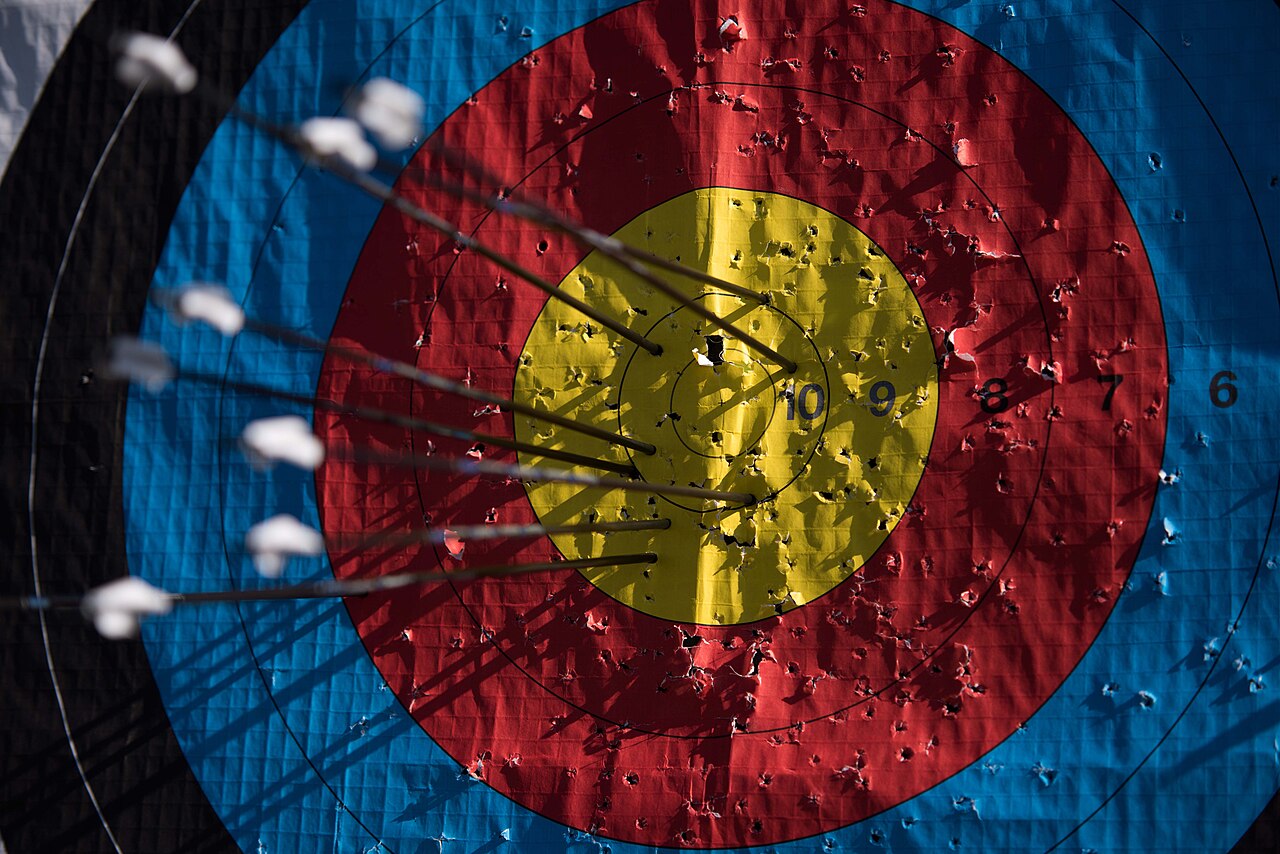
Highest Archery Scores Explained
Highest Archery Scores Explained
When people ask about “the highest archery scores” they usually mean one of two things: the theoretical maximum for a given round (for example, 720 for a 72‑arrow qualification round) and the top scores actually recorded under competition conditions. This article explains both: the formats that produce the biggest numbers, how records are created and ratified, why some spectacular scores never make the official books, and what those figures actually tell analysts, coaches and archery bettors.
What “highest score” means: rounds, bows and maximums
Archery uses several standard rounds. Each round has a fixed number of arrows and a fixed per‑arrow maximum (10 points), so the theoretical maximum is simple arithmetic. The most commonly discussed high‑score rounds are:
- 72‑arrow ranking/qualification round (the “720”): 72 arrows × 10 = max 720. Recurve archers shoot this at 70 metres (122cm face); compound archers shoot at 50 metres (80cm face). (scribd.com)
- 1440 Round (formerly the FITA or “FITA‑1440”): 144 arrows across four distances; max 1,440 points (36 arrows at each distance). This round is used as a recognised record round in many categories. (worldarchery.sport)
- Indoor 60‑arrow rounds (18m): 60 arrows × 10 = max 600 (common in indoor world cup/indoor championships). (scribd.com)
- Match rounds (head‑to‑head) are shorter and use either the set system (recurve) or cumulative scoring (compound). Their maximums are smaller by design and are not generally used as long‑run “highest score” comparisons.
Because target face size and distance differ between divisions, a 720 by a compound archer at 50m is not directly comparable to a 720 by a recurve archer at 70m; the physical difficulty is different (smaller 10‑ring, shorter distance, mechanical advantages differ). The governing rules that define these rounds and target faces are set by World Archery. (scribd.com)
Official world records and recent headline performances
World Archery recognises specific record types (70m Round, 50m Round, 1440 Round, double rounds, match rounds, etc.) and only ratifies scores shot at events that meet its calendar and technical requirements. Below are a few high‑profile, verified marks and notable near‑records that help illustrate the ceiling of modern competitive accuracy.
| Round (typical arrows) | Theoretical max | Top recognised mark (example) | Notes |
|---|---|---|---|
| 70m Round (Recurve, 72 arrows) | 720 | 702 — Brady Ellison (USA), Lima Pan Am Games, 7 Aug 2019. | World record for recurve men’s 72‑arrow 70m qualifying round. (worldarchery.sport) |
| 50m Round (Compound, 72 arrows) | 720 | 718 — Braden Gellenthien (USA), Decatur, 13 Jul 2016 (official world best). | Compound archers commonly score higher than recurve because of equipment differences; 718 is the standing official mark. (worldarchery.sport) |
| 1440 Round (144 arrows) | 1,440 | 1,421 — Mike Schloesser (NED), Boekel, 30 Aug 2020 (world record). | Long‑metric test of range and consistency across four distances; Schloesser’s 1421 was ratified by World Archery. (worldarchery.sport) |
There are also extraordinary unratified or national performances that widen the conversation about “what’s possible.” For example, reports from 2026 show Mexican compound archer Sebastián García shot 719/720 at a national selection trial — one point better than the official 718 world record — but the score could not be ratified because the trials were not on the international calendar. That performance is compelling evidence that the functional ceiling for a 72‑arrow outdoor compound round is already at or very near perfection. (worldarchery.sport)
Why high qualification scores don’t always predict match wins
Two simple statistical realities explain why a top qualifying score is useful but not definitive:
- Format variance: qualification rounds (72 arrows) measure long‑run precision and consistency. Elimination matches are short (set system for recurve, four ends for compound) and therefore much more sensitive to variance and one‑off errors. World Archery’s match formats intentionally increase uncertainty and spectator drama. (scribd.com)
- Small sample noise: a single bad end, a gust of wind, or a momentary lapse in focus is much more damaging in a three‑ to five‑end match than over 72 qualifying arrows. The famous example is Brady Ellison—who shot the world‑record 702 in the 2019 Pan American Games ranking round—losing later in the same event’s elimination bracket (qf). That shows top qualifying score ≠ guaranteed medal. (worldarchery.sport)
Analysts who model match outcomes therefore typically use qualification score as an important but not exclusive input: combine it with head‑to‑head history, prior match performance under tournament pressure, wind and venue indicators, and—if available—live scoring patterns (per‑end averages). Always show confidence intervals: a model that predicts a 65% win probability from a given qualification advantage is far more credible than a binary “will win / will lose” claim.
Technical reasons scores differ: target faces, distances and bow mechanics
Two technical factors dominate the gap between bow divisions and formats:
- Target face and effective window: recurve 70m uses a 122cm face where the 10‑ring is larger in absolute terms than a compound 50m 10‑ring (the compound 10 is smaller—an 8cm circle—making perfect 10s harder despite shorter range). The World Archery rule set specifies distances and face sizes used for these rounds. (scribd.com)
- Mechanical assistance: modern compound bows offer let‑off, release aids and magnified sights that reduce steady‑state human error; that is why compound qualification scores cluster higher than recurve. That said, environmental factors (wind, light) still matter a great deal outdoors, and mental performance remains the critical human variable.
How records are ratified — and why some big scores don’t count
World Archery requires that record attempts occur at events registered on the international calendar, with approved judges, score certification, and proper documentation. Domestic trials or non‑registered events, however authentic the performance, normally cannot be ratified. That’s why Sebastián García’s 719 (reported at a Mexican selection trial) exceeded the official 718 world record but was not added to World Archery’s books. The arrows and the skill were real, but the paperwork and registration rules were not met for ratification. (worldarchery.sport)
Practical takeaway: when comparing “highest” numbers, always check whether the score is an official World Archery record or a national/meet best that may not be ratified.
Statistics, sample‑size limits and what scores can (and cannot) predict
When using high scores for forecasting (for example, seeding models or betting models), keep the following in mind:
- Qualification scores are a good measure of technical consistency and seasonal form but are biased toward archers who train for long‑distance precision; they underweight matchplay skills and mental resilience in short head‑to‑head settings.
- Environmental signals matter: a score posted in calm, sheltered conditions (e.g., a low‑wind stadium) is not directly comparable to one shot in gusty open fields. Adjust for venue conditions when building comparative models.
- Regression to the mean: extraordinarily high or low results are often followed by moderation; use rolling averages and shrinkage estimates rather than single‑score predictors.
- Sample size: for elite archers the number of 700+ qualification scores in a season is limited—models must therefore be robust to small‑n inference and should quantify uncertainty explicitly.
Correlation does not imply causation: a higher qualification score correlates with a higher probability of reaching late rounds, but it does not cause match victories. Other covariates—psychological resilience, match history, and head‑to‑head matchup styles—carry explanatory power that should be included in any analytic or betting model.
Archery betting: availability, what to expect, and an archery‑bettor’s checklist
From an archery‑bettor perspective it is important to know that archery betting markets are event‑dependent. Many mainstream sportsbooks publish rules for archery and will offer markets during the Olympic Games, World Archery Championships, World Cup stages and other major events; but continuous coverage is uncommon. World Archery has also taken steps to work with betting industry partners and monitor markets to protect integrity. (help.bet365.com)
Pr